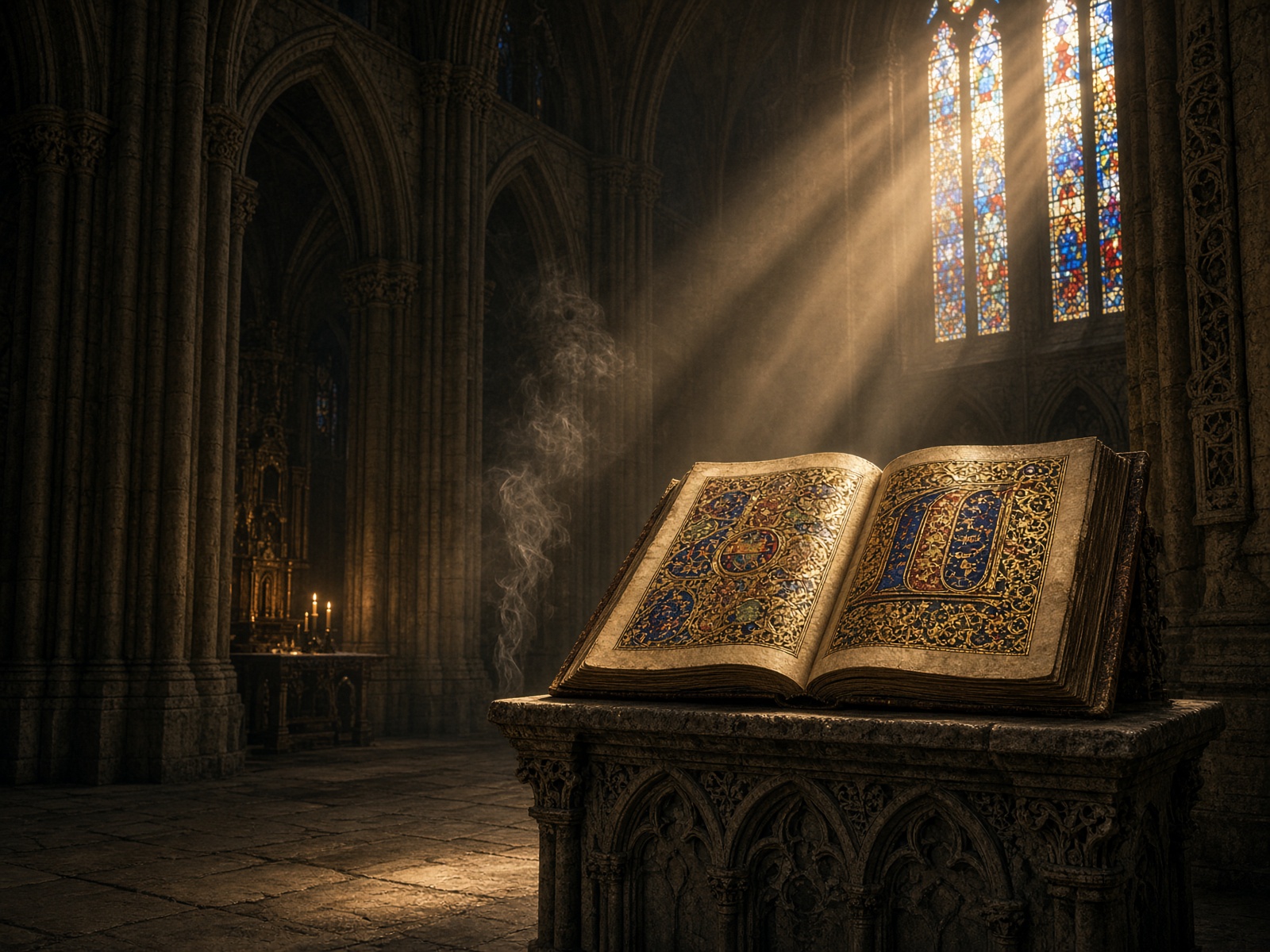
c. 700–1400
Medieval
Faith, pilgrimage, and vernacular awakening. Manuscript culture carries antiquity forward while inventing new journeys of the soul.
The climate of the age
After Rome’s political collapse, monasteries preserve Latin while vernaculars rise. Heroic poetry, courtly romance, and scholastic allegory share a world structured by the Church, feudal obligation, and the idea of pilgrimage—literal and spiritual. Dante and Chaucer stand at the end of the age as its summits.
The Middle Ages invent the European vernacular canon and the journey as a map of the soul. Dante’s cosmos and Chaucer’s social panorama remain the era’s two great instruments.
- Allegory and dream vision
- Courtly love and chivalric quest
- Vernaculars claiming literary dignity
- Christian cosmology as narrative architecture
Leading authors
Medieval
Dante Alighieri
1265–1321
Florentine exile who built a three-part cosmos in vernacular terza rima. The Comedy is theology, revenge, love lyric, and encyclopedia in one pilgrimage.
Medieval
Geoffrey Chaucer
c. 1343–1400
London courtier and the first great English social novelist in verse. His pilgrims talk the island into literature.
Medieval
The Beowulf Poet
c. 8th–11th century
Anonymous Old English maker of the surviving Germanic heroic epic. The poem holds pagan courage inside a Christian scribal world.
Medieval
The Roland Poet
c. late 11th century
Anonymous singer of the greatest chanson de geste. The rear guard at Roncevaux becomes a theory of loyalty, fame, and what a death is for.
Medieval
Augustine of Hippo
354–430
Rhetorician, convert, bishop. His Confessions invent the Western inward life as a narrative: memory, desire, and the God who is nearer than the self.