c. 1900–1945
Modernism
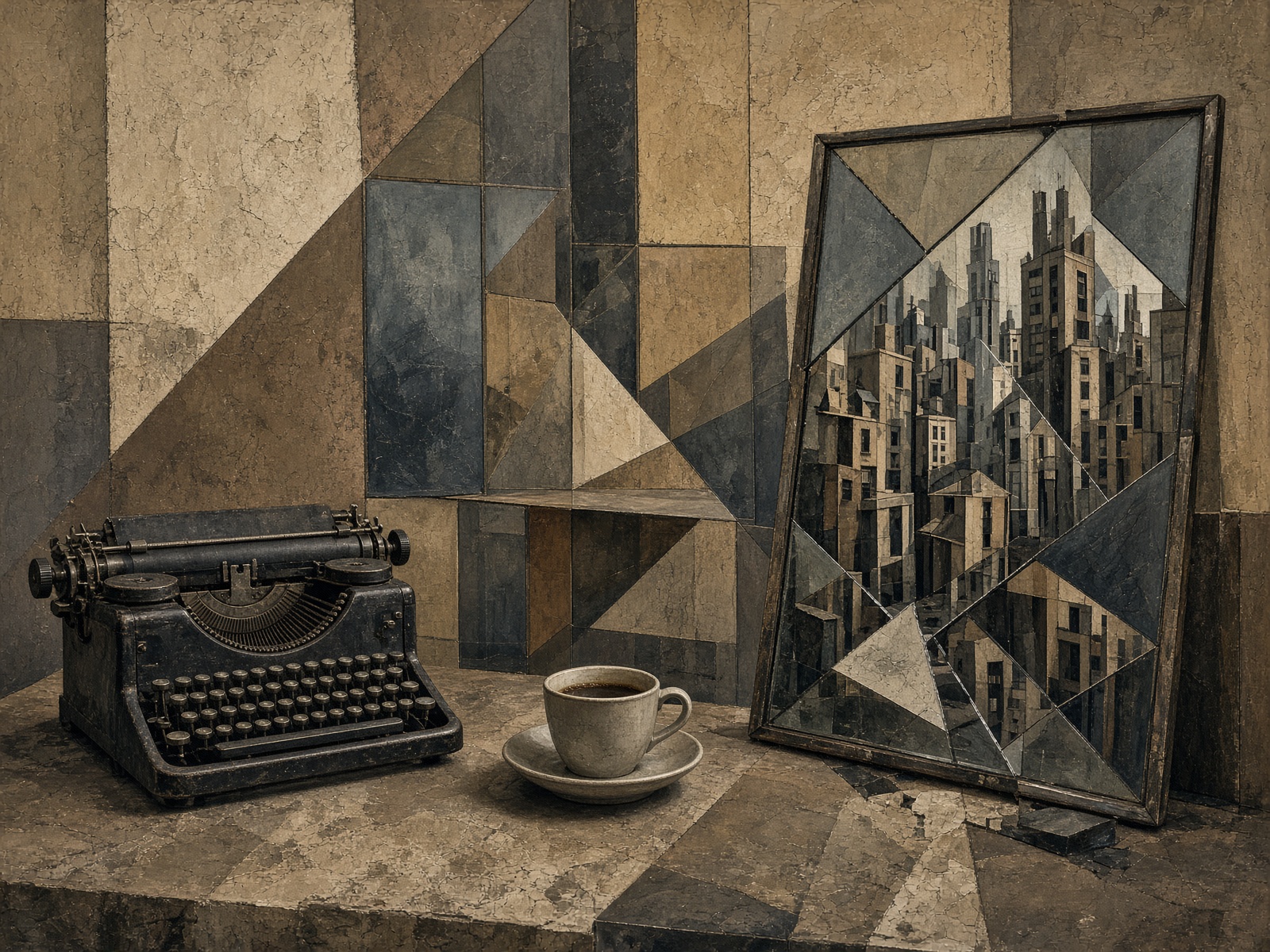
Form breaks. Stream of consciousness, myth in the city, and the sentence as a cracked mirror.
The climate of the age
World war, psychoanalysis, cinema, and the metropolis shatter nineteenth-century continuity. Writers experiment with time, voice, and myth to catch a mind that no longer trusts a single story. Difficulty becomes an ethic as much as a style.
Modernism changes what a sentence can do. It remains the technical horizon later writers either inherit or refuse.
- Interior monologue and fractured time
- Mythic method in modern settings
- Irony, exile, and the impersonal mask
- The city as a nervous system
Leading authors
Modernism
James Joyce
1882–1941
Dublin exile who turned one ordinary day and one artist’s youth into laboratories for the English sentence.
Modernism
Virginia Woolf
1882–1941
Novelist and critic of Bloomsbury who made consciousness a liquid medium. Her books listen for the pulse under talk.
Modernism
Franz Kafka
1883–1924
Prague clerk whose lucid nightmares of law, family, and metamorphosis became a modern dialect. The ordinary sentence delivers the impossible.
Modernism
T. S. Eliot
1888–1965
American-born, London-made poet-critic. The Waste Land stitches quotation, ritual, and urban debris into the century’s most influential poem.
Modernism
Ernest Hemingway
1899–1961
The plain style as a moral claim. After the war, his sentences leave out what cannot be borne, and the omission becomes the meaning.
Modernism
William Faulkner
1897–1962
Chronicler of Yoknapatawpha, which is to say of the American South as a doomed manuscript: race, land, names, and time that will not stay in order.