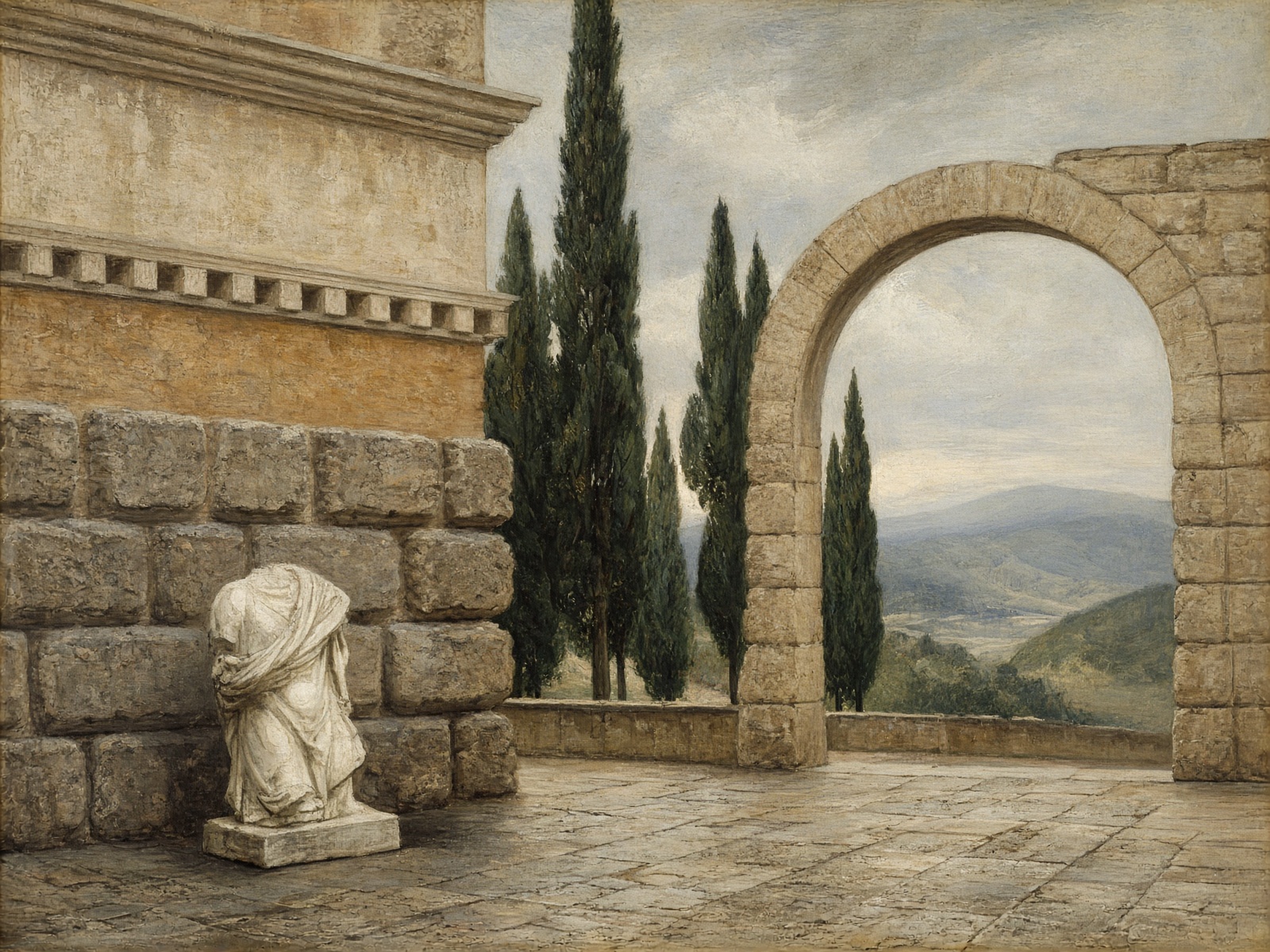
c. 1400–1660
Renaissance
Humanism recovers the ancients and discovers the modern self: essay, tragedy, and the novel’s first great joke.
The climate of the age
Print, recovered manuscripts, and new courts remake literary life from Florence to London. Writers measure themselves against Greece and Rome while staging inner conflict with new intensity. The Reformation, exploration, and the early modern state press on every page.
Renaissance literature invents many of the forms we still treat as literature itself—especially Shakespearean drama, the personal essay, and the novel’s self-aware play with truth.
- Humanist imitation of classical models
- The essay as a form of self-portrait
- Blank verse tragedy and the public stage
- Irony, perspectivism, and the first modern novel
Leading authors
Renaissance
William Shakespeare
1564–1616
Actor-playwright of the London stage whose histories, comedies, and tragedies became a second scripture for later centuries. His English still feels like thought happening in public.
Renaissance
Miguel de Cervantes
1547–1616
Soldier, tax collector, and late-blooming genius of Spanish prose. Don Quixote laughs a dying chivalric world into the modern novel.
Renaissance
Michel de Montaigne
1533–1592
Bordeaux magistrate who retired to a tower and invented the essay as a portrait of a mind in motion. He writes as if thinking were a form of friendship.
Renaissance
Christopher Marlowe
1564–1593
Poet of the overreacher. In a short, violent life he gave the English stage its first great overgoer—Faustus, who would rather know than be saved.