c. 1790–1850
Romanticism
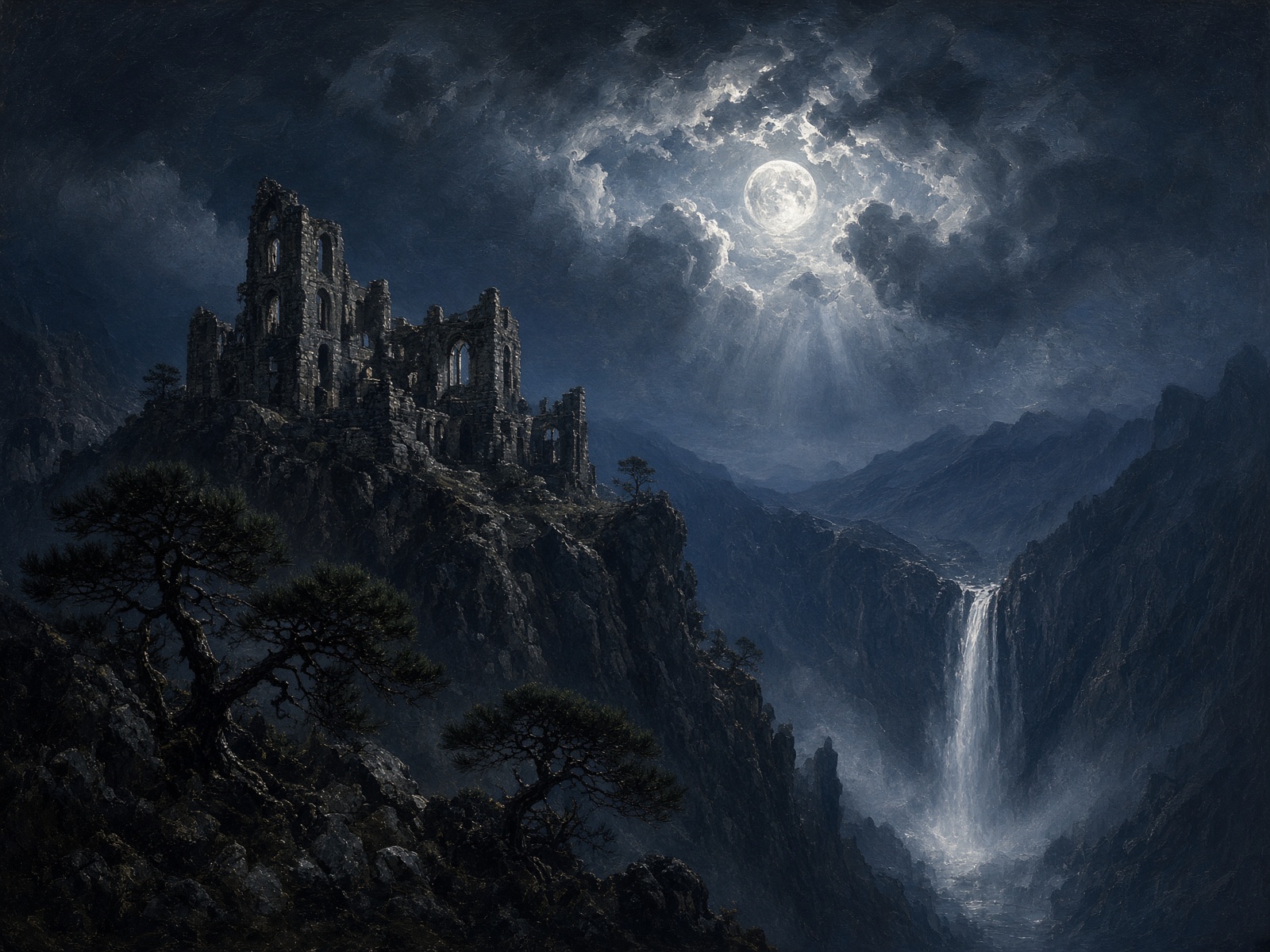
The self against the sublime. Nature, ruins, and the ungovernable imagination replace the salon’s cool light.
The climate of the age
Revolution, industrial smoke, and a new feeling for landscape unseat neoclassical poise. Poets claim the lyric as a record of consciousness; the Gothic and the fragment become serious forms. The artist is recast as a seer, exile, or wreck.
Romanticism installs the modern idea of the writer as a sensibility. Almost every later revolt—in symbol, confession, or ecological writing—still borrows its weather.
- Lyric as inward weather
- The sublime in nature and ruin
- The Gothic and the created monster
- Genius, childhood, and the fragment
Leading authors
Romanticism
William Wordsworth
1770–1850
Lake poet who argued that ordinary speech and remembered childhood could remake poetry. Nature, for him, is a teacher of the mind.
Romanticism
John Keats
1795–1821
London-trained surgeon who became, in a few years, the most sensuous of English lyric poets. His odes make transience feel like gold.
Romanticism
Mary Shelley
1797–1851
Novelist formed in a circle of radicals and poets. Frankenstein turns the Promethean dream of making life into a modern myth of responsibility.
Romanticism
Edgar Allan Poe
1809–1849
American poet, critic, and inventor of detective fiction. His tales treat terror as a precise architecture of the mind.
Romanticism
Johann Wolfgang von Goethe
1749–1832
The European man of letters as a climate. Faust is his wager that striving itself might be a kind of salvation—and a kind of damnation.